
The oil market in 2026 remains one of the most critical pillars of the global economy. Despite the growing adoption of renewable energy, oil continues to play a vital role in transportation, industrial operations & everyday life.
Global demand is steadily increasing particularly in developing economies where economic growth and energy consumption are rising rapidly. At the same time an OPEC+ actively manages supply levels to help maintain price stability. This ongoing balance between supply and demand keeps the market dynamic & also contributes to price fluctuations.
So, in this article, we will explore the best oil stocks to consider in 2026, including detailed comparisons of leading companies, insights into dividend performance and overview of valuation strategies. Our goal is to help you make more informed and confident investment decisions in today’s evolving energy market.
Oil Market Outlook 2026
The global oil market in 2026 continues to evolve under the influence of changing demand patterns, price volatility, and supply management by major producers. While growth is slowing, oil remains a key energy source worldwide.
Understanding market trends, pricing expectations, and OPEC+ strategies is essential for investors and industry watchers navigating the energy sector this year. Investors comparing different energy strategies and portfolio approaches can also explore energy transfer stock forecast and outlook to understand how midstream infrastructure stocks differ from upstream oil producers in terms of risk, cash flow stability, and dividend consistency.
Demand Outlook
The oil demand in the world in 2026 still shows a strong trend, but the growth is slowing down compared to the past few years. The International Energy Agency estimates that the world will demand about 640,000 to 850,000 barrels per day (bpd) of oil in 2026, with non-OECD nations like China, India, and other emerging markets as the major sources of this growth.
Oil Price Expectations
In 2026, oil prices are likely to be in a highly volatile state, both due to the underlying supply-demand forces and geopolitical uncertainties. Brent crude will go to approximately $60-$65 per barrel on average throughout the year.
Nevertheless, the short-term fluctuations in prices may vary greatly from this average. For example:There have been geopolitical disruptions that have seen prices rise to over $100–$120 per barrel. Prices might not fall below an extreme supply shock of about $150 a barrel, Meanwhile, the U.S. Energy Information Administration anticipates a slow decrease in prices in the latter part of the year, as the world supply will surpass demand, causing the inventories to increase and pushing down prices.
OPEC+ Influence
OPEC+ will continue to play an important role in the oil market in 2026. The group is controlling the volume of production to stabilise the price and avoid oversupply. OPEC+ production decisions are considered to be one of the most vital aspects that investors should follow, as they directly affect oil prices worldwide.
The dilemma faced by OPEC+ in 2026 is a complicated one:
The supply in the whole world is likely to grow by approximately 2.4 million B/D, adding to the surplus in the market (IEA).
Geopolitical shocks and supply shocks do not allow them to dominate the market completely.
Energy Transition Impact
The trend towards renewable energy is still impacting the future of oil markets in the global picture. Government and business are putting more money towards clean energy, electrification, and carbon reduction policies, and these are slowly decreasing reliance on fossil fuels.
Nevertheless, even in the year 2026, oil will still be a necessity because of:
- High transportation and aviation dependency on oil.
- Industrial and petrochemical demand.
- In some areas, the scalability of renewables is limited.
Types of Oil Stocks
In the energy value chain, oil and gas firms are involved in various stages. All kinds of oil stocks possess dissimilar business models, risks & potential returns. The knowledge of such kinds assists investors to select the appropriate combination for their portfolio.
Integrated Oil Companies
Integrated companies are involved in the entire oil value chain, such as exploration, production, refining and distribution. Such diversification enables them to have stable incomes despite the oscillating oil prices. In case of declining upstream profits, downstream activities such as refining may contribute to a balanced revenue.
Upstream (Exploration & Production)
Upstream firms are only interested in the exploration and extraction of oil and gas. Their profits are directly correlated to oil prices, so they can rise in great markets, but also decline in the weak ones. These businesses tend to be expansionary.
Midstream (Pipelines & Storage)
Midstream companies use pipelines and infrastructure to transport and store oil and gas. Their cash flow is more predictable and consistent since their revenue is typically on a contract and volume basis, and not on oil prices.
Downstream (Refining & Marketing)
Refined crude oil is converted into refined products such as gasoline, diesel and jet fuel by downstream companies, which are then sold to the consumers. Instead of being directly dependent on crude oil prices, their performance is more dependent on refining margins and fuel demand.
Oilfield Services
The oilfield service companies offer technology, equipment, and services to oil producers. They do not drill themselves but gain when there is an upsurge in drilling activities. They will grow depending on which oil firms invest in exploration and production.
10 Best Oil Stocks to Buy Today
The following are the best oil and gas stocks to follow in 2026, which are determined by good fundamentals, sustainable dividends, and growth prospects.
1. ConocoPhillips

ConocoPhillips is one of the top upstream companies that specialises in the exploration and production of oil and gas. It is appealing due to its low-cost assets and good balance sheet, which enables it to remain profitable even during times when the oil cost is down.
The company provides both fixed dividends as well as variable returns, hence attractive to both income and growth investors. It is also highly geared to the growth of oil demand all over the world. But it is highly sensitive to the fluctuations in oil prices, and this makes it risky in times of downturns.
If you want a deeper idea of how the stock may perform in the coming years, you can check this detailed ConocoPhillips stock analysis here:
2. EOG Resources

EOG Resources is characterized by effective shale operations and a strong growth in production. It is unique as it can produce high free cash flow and low operating costs.
Its investments reward its investors both with regular and special dividends particularly when the market is favorable. It has a disciplined capital spending policy that makes it stronger than most of its counterparts. It is, however, exposed to shale market risks and U.S. oil price volatility.
3. Chevron
Chevron is a multinational oil company that refines and distributes oil. It has a strong appeal due to its stability, strong global resources, and financial stability. Chevron is among the best dividend companies in the energy industry and is the best long-term investment.
The diversification of its operations helps reduce risk compared to pure upstream companies. The obvious disadvantage is that it will grow slowly in contrast to smaller, more aggressive producers.
ExxonMobil is a global energy company and one of the largest in the world, having a fully integrated business model. It is appealing because of its size, strong cash flow, and the diversity of its operations in oil, gas, and chemicals.
The company has a history of paying and hiking dividends and thus is a favourite among income investors. It is also a heavy investor in new energy and efficiency projects. But its size is a drag on growth, and performance is determined by the state of global oil markets.
4. Exxon Mobil
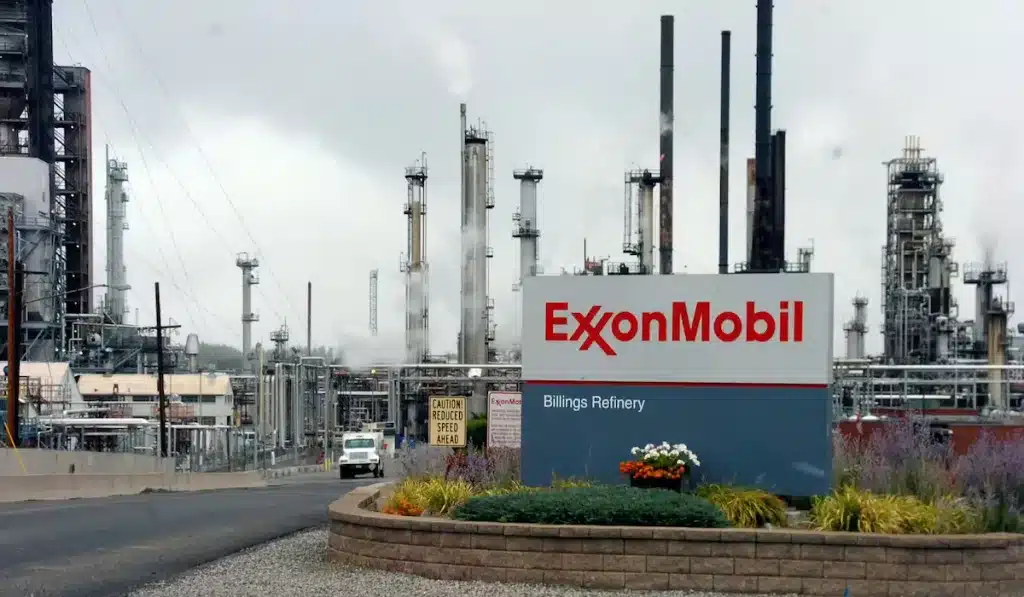
ExxonMobil is a global energy company and one of the largest in the world, having a fully integrated business model. It is appealing because of its size, strong cash flow, and the diversity of its operations in oil, gas, and chemicals.
The company has a history of paying and hiking dividends and thus is a favourite among income investors. It is also a heavy investor in new energy and efficiency projects. But its size is a drag on growth, and performance is determined by the state of global oil markets.
You can also explore its detailed valuation and future outlook in this ExxonMobil stock analysis
5. Equinor

Equinor is a Norwegian energy company that is both very active in oil and renewable energy. It is appealing due to its solid government support and interest in energy transition.
The company is also a provider of competitive dividends, besides investing in offshore wind and clean energy initiatives. This balance offers income and growth potential in the long-term. Nonetheless, it is exposed to regulatory risks and its policies are subject to European energy policies.
6. Eni

Eni is a European, African and Middle Eastern based oil and gas company. It is attractive due to its strong international portfolio and focus on innovation and energy transition.
The firm has good dividend payouts and rising output growth. Its diversified business aids in risk management in various areas. But the emerging markets provide geopolitical exposure that may influence performance.
7. SLB
SLB is the largest Company in the world that offers technology and solutions to the energy producers. It has the advantage of higher industry drilling and exploration activity and hence is a powerful industry growth play.
The company is more technologically and efficiency oriented as opposed to the direct production of oil. It has average dividends and a high growth opportunity due to increased demand for services. Its performance is however, subject to capital expenditure by the oil companies, which is subject to change.
8. Marathon Petroleum

Marathon Petroleum is a downstream firm that deals with the refining and distribution of fuels. It is appealing as it enjoys high refining margins and stable fuel demand. The company has high cash flow and value-generating dividends and share buybacks. It is also not as directly influenced by oil price fluctuations as upstream companies. Nevertheless, margins are unforeseeable to refine, and this can affect earnings.
9. Devon Energy

Devon Energy is an upstream firm that deals with the production of oil and gas in the U.S. It is characterised by its policy of flexible dividends that pay more when the company has high profits.
The company boasts of efficient operations and good growth in production, and therefore appeals to growth investors. It also enjoys disciplined capital management. Its variable dividend, however, may fall during low oil prices, which may add to income uncertainty.
10. Kinder Morgan
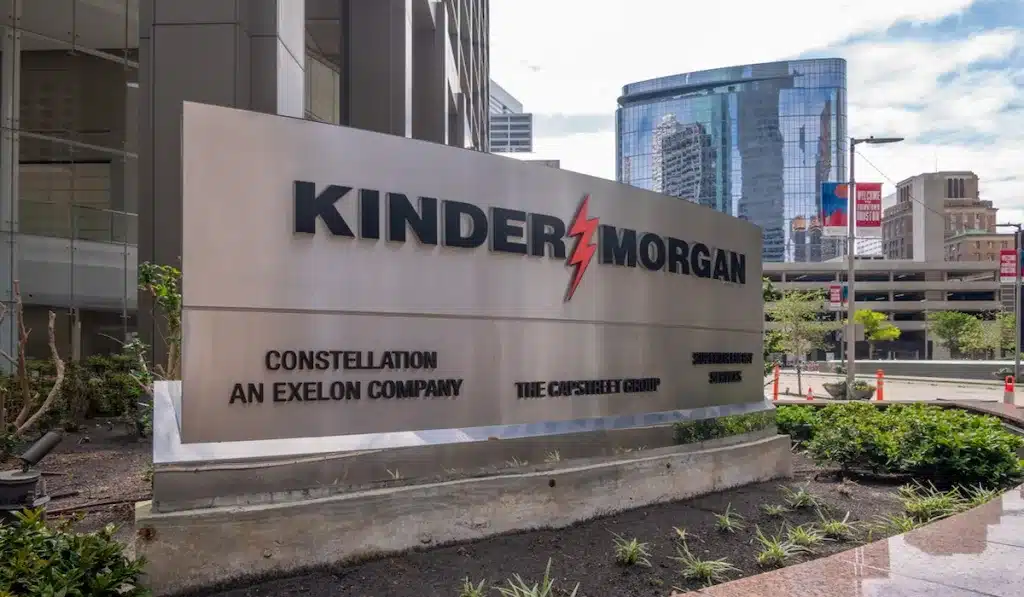
Kinder Morgan is a top midstream company, which manages pipelines and energy infrastructure. It is appealing due to its predictable and consistent cash flows, which are not highly dependent on the fluctuations in oil prices.
The company has a steady dividend, and thus it is a good income investment. It has an extensive network of infrastructure, making it stable in the long run. Yet, it cannot grow as high as upstream companies and its growth is dependent on energy transportation demand.
Stock Comparisons
This section compares the biggest oil stocks side-by-side to help investors make clear decisions based on dividends, growth, risk, and valuation.
XOM vs OXY (Dividend vs Growth)
ExxonMobil and Occidental Petroleum represent two very different investment styles.
ExxonMobil is a stable, dividend-focused company with a diversified business model. It generates consistent cash flow and offers reliable payouts, making it ideal for income investors. Its size and global operations reduce risk but limit rapid growth.
On the other hand, Occidental Petroleum is more focused on growth. It has higher exposure to oil price movements and benefits more when prices rise. The company has improved its balance sheet in recent years and is positioned for stronger upside potential.
XOM vs CVX (Dividend Strength and Stability)
ExxonMobil vs Chevron is one of the most searched comparisons in the energy sector.
Both companies are integrated oil giants with strong global operations. However, there are some differences:
- ExxonMobil offers slightly higher production scale and diversification
- Chevron is often seen as more disciplined with capital and cost control
In terms of dividends, both companies have long histories of consistent payouts. Chevron is known for steady dividend growth, while ExxonMobil benefits from strong cash flow across cycles. Read our detailed analysis of these two conglomerates.
XOM vs CVX vs COP Comparison
This is one of the most important comparisons for investors choosing between integrated and upstream companies. You can find the detailed comparison of all these companies below.
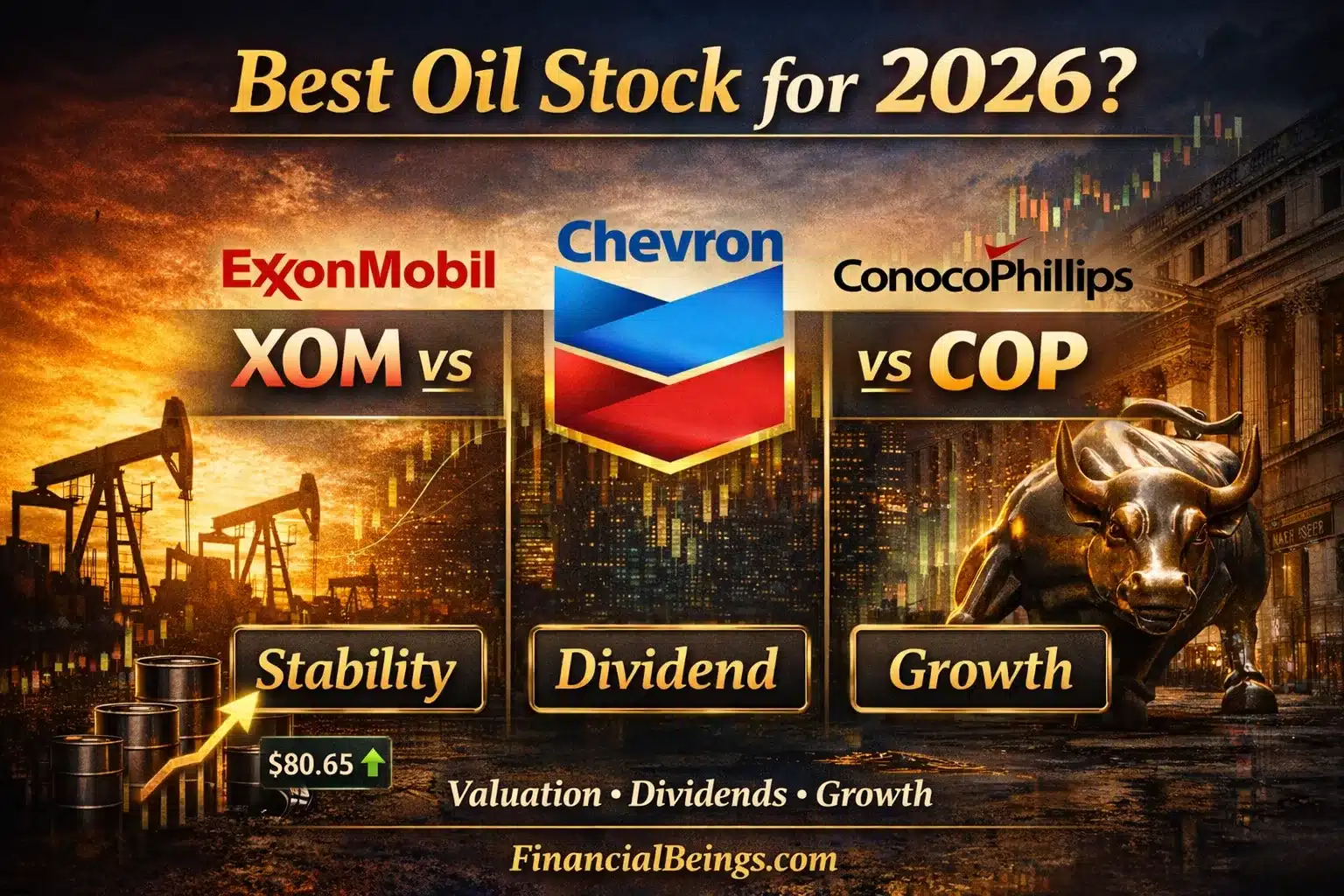
- ExxonMobil → Best for stability and global diversification
- Chevron → Best for consistent dividends and efficiency
- ConocoPhillips → Best for growth and oil price upside
ConocoPhillips, as a pure upstream company, benefits more when oil prices rise but also carries higher risk. In contrast, ExxonMobil and Chevron provide more stable returns due to their integrated operations.
APA vs COP(Risk vs Reward)
APA Corporation and ConocoPhillips are both upstream companies, but they differ in risk level.
ConocoPhillips is a more established and stable company with strong assets and consistent performance. It offers balanced growth and lower risk compared to smaller players.
APA Corporation, on the other hand, is considered a higher-risk, higher-reward stock. It has strong upside potential due to its asset base and exploration opportunities, but performance can be more volatile. A complete value analysis of these stocks can be found here.
Valuation and Risk Analysis
Valuation is one of the most important factors when investing in oil stocks. Most energy firms will be appealing in terms of valuation in 2026, particularly as compared to other industries such as technology.
The price-to-earnings (P/E) ratios of most large oil companies are in the range of 9x to 14x, a very low price when considering the high cash flow and profits of these companies.
Intrinsic Value Overview
Intrinsic value is the actual value of a company, in terms of earnings, free cash flow and long-term growth potential.
As of 2026, the leading oil companies, such as ExxonMobil and Chevron, will be in a position to produce a robust free cash flow, which is backed by disciplined capital expenditure and consistent production rates.
| Company | P/E Ratio Range | Free Cash Flow Strength | Valuation View |
| ExxonMobil | 10x – 13x | Very Strong | Fairly valued |
| Chevron | 11x – 14x | Very Strong | Fairly valued |
| ConocoPhillips | 9x – 12x | Strong | Undervalued |
| Devon Energy | 8x – 11x | Strong | Undervalued |
| APA Corporation | 7x – 10x | Moderate | High-risk value |
Undervalued vs Overvalued Stocks
According to the existing position on the market:
Undervalued stocks:
- ConocoPhillips, Devon Energy
- Good performance, yet at lower multiples.
Fairly valued stocks:
- ExxonMobil, Chevron
- Already in a price-stable performance.
Deep value / Higher risk:
- APA Corporation
- Greater upside and greater volatility
The strength of cash flow is of great interest to investors who are no longer interested in earnings alone, and this is a plus to the well-run energy companies.
Margin of Safety
Margin of safety refers to the purchase of a stock at a lower price than its actual price to minimise downside risk.
It is particularly imperative in oil stocks since:
- Oil prices are very unstable.
- Earnings are subject to change.
- The mood of the market changes very quickly.
Example
- Big corporations such as ExxonMobil and Chevron offer a greater margin of safety as they have stable cash flows.
- Smaller upstream companies: these provide greater upside with less protection.
Price Scenarios (Bear, Base, Bull Case)
The performance of oil stocks is largely reliant on oil prices; investors must consider scenarios:
Bear Case (Oil <$60)
- Reduced profit and poor cash flow.
- Dividend pressure (particularly with the upstream companies)
- Defensive stocks have a better performance.
Best placed: Chevron, ExxonMobil.
Base Case ($60–$80 Oil)
- Stable incomes and regular dividend payments.
- Even performance within the sector.
Best placed: Majority of large-cap oil stocks.
Bull Case ($80+ Oil)
- Strong profit growth
- Increased dividends, buybacks.
- Upstream companies outperform Best placed: ConocoPhillips, Devon Energy.
Dividend Analysis
Dividends are one of the main reasons investors purchase oil stocks. The energy industry will remain among the best-paying dividend industries in the market in 2026 due to the good cash flow and improved financial discipline. The following is a comparison of significant oil stocks in terms of type of dividend, yield range and stability:
| Company | Dividend Type | Yield Range (2026) | Stability | Best For |
| ExxonMobil | Fixed | 3% – 4% | Very High | Long-term income |
| Chevron | Fixed | 3% – 4% | Very High | Reliable dividends |
| ConocoPhillips | Fixed + Variable | 2% – 5%+ | Medium | Growth + income |
| Devon Energy | Variable | 3% – 7%+ | Low–Medium | High yield potential |
| Kinder Morgan | Fixed | 5% – 6% | High | Stable cash flow |
| EOG Resources | Fixed + Special | 2% – 4%+ | Medium | Balanced investors |
Dividend Growth History
There are oil companies that have established a good reputation for increasing their dividends over the years.
- ExxonMobil has boosted dividends over the decades.
- Chevron also boasts of a history of consistent growth.
These companies are sometimes referred to as dividend aristocrats, as they are still able to pay and increase dividends even in tough market conditions.
Payout Ratios and Sustainability
A high dividend can only be of help when it is sustainable. By 2026, the majority of oil firms will be better off than they were in past cycles.
Their attention is on:
- Lower debt levels
- Good free cash flow.
- Controlled capital spending
This renders dividends more dependable than ever. However:
- If oil prices, upstream firms can cut payouts.
- Midstream companies tend to have stable dividends because of income from contracts.
The trick is to seek sustainable dividends and not high yields.
Aristocrats vs Variable Dividends
There are two main types of dividend strategies in oil stocks:
Stable Dividend Stocks
- Regular and increasing dividends.
- Reliable income
- Lower risk
Variable Dividend Stocks
- Increased dividends in good oil markets
- Flexible dividend policy
- More volatile income
How to Invest in Oil Stocks
Buying oil stocks in 2026 is a straightforward process, but it requires the right broker, research, and investment strategy. Here are 3 steps how you can buy oil stocks:
Choose a Broker
To trade in stocks such as ExxonMobil and Chevron safely, it is recommended to choose a trusted broker with low charges, user-friendly trading tools, and access to real-time market information.
Research and Select Stocks
- Examine businesses on websites based on cash flow, dividends, growth and business model.
- Construct a blend of stable, growth, and income stocks to lower risk.
Build and Manage Your Portfolio
- Establish an income/ growth portfolio and manage it regularly depending on the market conditions.
- Rebalance where necessary and remain long-term performance oriented.
Benefits & Risks of Oil Stocks
Benefits
Oil stocks are high dividend payers, high cash flow and could serve as an inflation hedge in case of an increase in energy prices. They also enjoy the advantage of the constant demand all over the world, and hence they are a significant component of most long-term portfolios.
Risks
They are influenced by volatility in the price of oil, political activities, and mounting demands of environmental (ESG) policies. These are the factors that may cause an abrupt shift in earnings and stock performance, particularly under unpredictable market situations.
Which Oil Stocks Should You Buy in 2026?
The selection of the appropriate oil stocks in 2026 will be determined by your investment objectives, risk-taking, and the need to generate income, growth or stability.
| Investor Type | Allocation | Stocks | Why They Are Suitable |
| Income Investors | 40% | ExxonMobil, Chevron | These firms have consistent and increasing dividends backed by robust cash flow and international business. |
| Growth Investors | 30% | ConocoPhillips , EOG Resources, Devon Energy | These businesses will enjoy the best in case the oil prices increase and provide greater capital gains. |
| High-Risk Investors | 10% | APA Corporation | This stock has greater upside potential, but is more volatile and riskier. |
| StableIncome Investors | 20% | Kinder Morgan, Enterprise Products Partners | These midstream enterprises yield a more constant revenue stream with less volatility and are based on infrastructure-related business models. |
Conclusion
Oil stocks will always be a solid investment choice in 2026, as they provide a combination of income, value, and growth. ExxonMobil and Chevron are among the top choices that investors make when they want to get a steady dividend, although companies such as ConocoPhillips and EOG Resources offer better growth prospects. Stocks such as APA Corporation can be considered for high returns by more aggressive investors.
The correct decision varies according to your objectives. Income investors will concentrate on large and stable companies, whereas growth investors can focus on upstream producers. Having a balanced portfolio that incorporates both has the potential to enhance overall returns.
The most appropriate moment to purchase oil stocks is at low points in the market when valuations are low, like when the P/E ratios are lower than their historical averages. The opportunities in the energy sector can be used to your advantage by investing with a long-term perspective and concentrating on good fundamentals.
Frequently Asked Questions (FAQs)
Are oil stocks a good investment in 2026?
Yes, oil stocks can be a good investment in 2026 because of steady global demand and strong cash flow from major energy companies.
Which oil stock gives the best dividend?
Chevron and ExxonMobil are known for paying consistent and strong dividends to shareholders over many years.
Is it risky to invest in oil stocks?
Yes, oil stocks can be risky because prices depend on global oil demand, politics, and supply changes.
Can oil stocks grow in the long term?
Yes, many oil companies grow long term through production expansion, dividends, and rising global energy demand.
Sources
| No. | Source | Description | Link |
|---|---|---|---|
| 1 | International Energy Agency (IEA) | World Energy Outlook 2026 & Oil Market Report (April 2026) | iea.org |
| 2 | U.S. Energy Information Administration (EIA) | Short-Term Energy Outlook – May 2026 | eia.gov |
| 3 | OPEC+ | Monthly production decisions and communiqués (2026) | opec.org |
| 4 | ExxonMobil Corporation | 2025 Annual Report & Q1 2026 Earnings | investor.exxonmobil.com |
| 5 | Chevron Corporation | 2025 Annual Report & Q1 2026 Results | chevron.com/investors |
| 6 | ConocoPhillips | 2025 10-K & Q1 2026 Earnings | conocophillips.com |
| 7 | EOG Resources | Investor Presentations & 2026 Guidance | eogresources.com |
| 8 | Devon Energy | 2025 Annual Report & Dividend Policy | devonenergy.com |
| 9 | Kinder Morgan | 2025 10-K & Q1 2026 Earnings | kindermorgan.com |
| 10 | Yahoo Finance / Seeking Alpha | Stock valuation, P/E ratios & dividend data (May 2026) | finance.yahoo.com |